RESPONSIVE WEB DESIGN CHECKER
HOW RESPONSIVE IS YOUR WEBSITE?
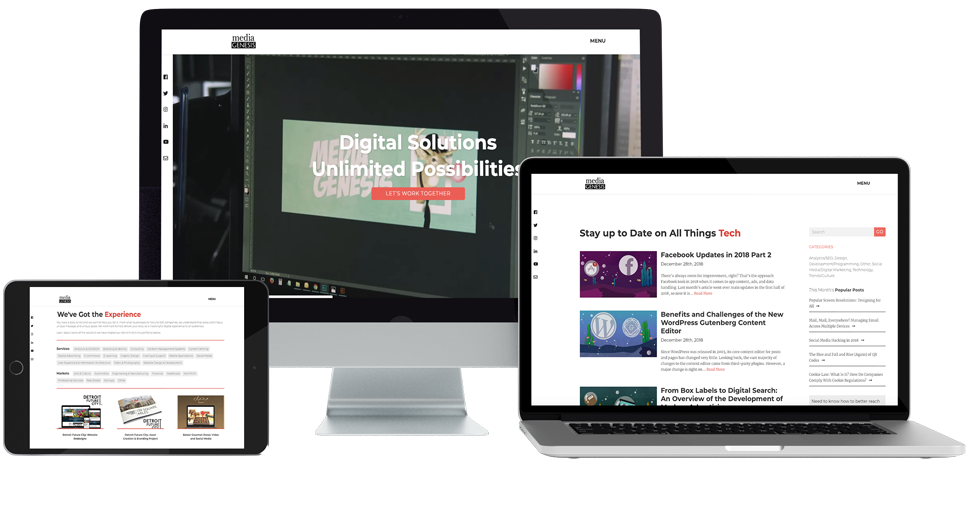
So, Where Did the Checker Go?
If you came here to type in a URL and watch your website squeeze itself onto a tiny phone screen, you've found the right place. You're just a little late to the party. From 2012 until 2026, Responsive Design Checker let anyone preview a website on phones, tablets, laptops and oversized desktop monitors, all from one browser tab.
We retired that feature for two reasons. Every major web browser now has the same tool built in, and it does the job better than we can from the outside. A tool that will display any website on the internet will also display the sketchy ones, and that's not something we want our name on.
Check Your Site the Modern Way
Good news. You already have everything you need. Try one of these.
- Chrome or Microsoft Edge. Press F12 (Cmd + Option + I on a Mac) to open Developer Tools. Then press Ctrl + Shift + M (Cmd + Shift + M on a Mac) to turn on the device toolbar. Pick a phone or tablet from the dropdown, or drag the edges to any size you like.
- Firefox. Press Ctrl + Shift + M (Cmd + Option + M on a Mac) to open Responsive Design Mode.
- Safari. Go to Settings, open the Advanced tab and check "Show features for web developers." Then choose Develop > Enter Responsive Design Mode.
- The no-tech method. Pull your site up on your actual phone. Scroll every page, tap every menu and button, and turn the phone sideways. If anything overlaps, disappears or makes you squint, that's your to-do list.
A Very Short History of Responsive Design
In May 2010, web designer Ethan Marcotte published an article in A List Apart titled "Responsive Web Design." The iPhone was three years old. The iPad had been on shelves for about seven weeks. Most companies tackling the mobile problem were building a separate "m-dot" mobile site and hoping for the best.
Marcotte's idea was simpler. Build one website that bends to fit whatever screen it lands on. He did it with three ingredients, fluid grids, flexible images and CSS media queries, and the industry took notice. Two years later, our developers built Responsive Design Checker so they could see how well sites were keeping up. As it turned out, a lot of non-developers wanted to know too.
In April 2015, Google started favoring mobile-friendly sites in mobile search results. The web nicknamed it "Mobilegeddon," and responsive design went from a nice idea to the price of admission. Today Google looks at the mobile version of your site first when deciding how to rank it, and a little over half of all web traffic worldwide comes from mobile devices.
The headline above still asks the right question. You just answer it with your own browser now.
ABOUT
RESPONSIVE DESIGN
People don't visit your website from one place anymore. They show up on a phone in a parking lot, a tablet on the couch and a laptop at work, sometimes all in the same afternoon.
So, What Exactly Is a Responsive Design?
Responsive design is a website layout that adjusts itself automatically to fit different screen sizes and resolutions. One site and one set of content work on every device, without losing quality or making the site harder to navigate.
Screen sizes keep changing, so the target keeps moving. For what to design for right now, see our guide to popular screen sizes and resolutions.
Why Does It Matter?
Visitors who have to pinch, zoom and squint to use your site don't stay long. A responsive site gives them the same easy experience on every screen, and that experience is what keeps them around long enough to call, buy or sign up.
Responsive Design: What to Expect
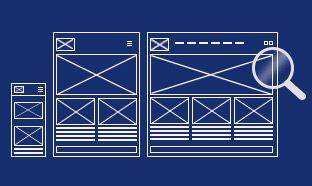
Start with the End in Mind
Designers and developers start with a wireframe, a simple outline of the site. This phase maps out the user experience (UX) and how people interact with each element, and it ends with a basic design concept.
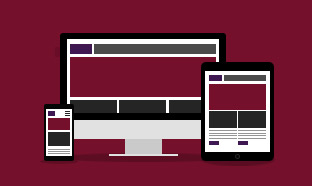
Create Complementary Layouts
Once the basics are set, designers create layouts for each screen size while keeping the brand, layout and user experience consistent. As screens get smaller, elements often stack, scale or collapse into expandable sections.
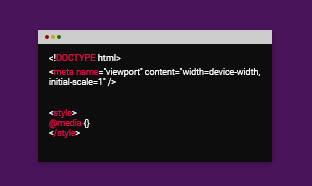
Expect Some Shifts
Image sizes, font sizes and even the navigation structure may change from one screen size to the next. The goal is a site that feels natural on every one.
Programming Magic
Developers turn the approved designs into code. Small pieces of code called media queries check the size of each visitor's screen and show the right layout.
Evolution
Web development changes as new browsers, devices and standards arrive. A good team keeps up with those changes and uses them to build sites that are faster and easier to use.
Responsive Check-ups
Devices and browsers keep changing, so check up on your responsive design at least once a quarter. The browser tools at the top of this page make it quick, and you'll catch layout problems before your visitors do.
ABOUT
MEDIA GENESIS
Media Genesis is a full-service digital agency that has worked alongside businesses of all sizes since 1996, helping them design, build, and market tailored web solutions and tell their stories online. Whether you need a website that works flawlessly on every screen, custom web development, or a full-service team to support your digital growth, we're ready to help.
Give us a call at 248-687-7888 or email us at inquiry@mediag.com.

880 W. Long Lake Road, Suite 225
Troy, MI, 48098
Phone: 248-687-7888
Fax: 248-687-7889
Email: inquiry@mediaG.com
MediaG.com